


11 Cleaning Tools Ranked From Most Likely to Scratch Your Surfaces to Safest
Cleaning a stubborn mess can be satisfying, right up until you realize the tool that removed the grime also left behind scratches, scuffs, or a dull spot. Some of the most effective cleaning tools get their power from abrasion, which isn’t always friendly to the surface underneath.
So how do you get enough scrubbing power to tackle the mess without damaging what you’re cleaning?
We ranked 11 common cleaning tools by cleaning power and surface safety, from the ones we’d use with the most caution to the ones we’d reach for first on scratch-sensitive surfaces. There are a few obvious picks on the list, and a couple that might surprise you.
In This Guide
Jump to the section you need:
- #11: Steel Wool — Why serious abrasive power comes with an even higher risk of scratching, dulling, or stripping the wrong surface
- #10: Melamine Sponge (Magic Eraser) — Why its impressive cleaning power comes with a higher risk of damaging delicate finishes
- #9: Traditional Scrub Sponge — Why the scouring side matters more than you might think
- #8: Plastic Scraper — When scraping is smarter than scrubbing
- #7: Soft-Bristle Cleaning Brush — How bristle stiffness and pressure affect surface safety
- #6: Non-Scratch Scrub Pad — A safer option when a cloth doesn’t provide enough agitation
- #5: Non-Scratch Scrub Sponge — A versatile everyday choice, with a few important limitations
- #4: Soft Cellulose Sponge — Very gentle, but with less cleaning power
- #3: Microfiber Scrubber — Extra cleaning power without immediately reaching for an abrasive
- #2: High-Quality Microfiber Cleaning Cloth — Our best all-around option for everyday cleaning
- #1: Glass & Polishing Microfiber — Our gentlest choice for scratch-sensitive, highly visible surfaces
- The Tool Isn’t Always What Scratches the Surface — Why dirt and grit can turn even a soft cloth into a scratch risk
- The Better Rule: Start Gentle and Work Your Way Up — How to choose the least aggressive tool that will get the job done
- Frequently Asked Questions — Quick answers about microfiber, Magic Erasers, non-scratch scrubbers, stainless steel, and more
Quick takeaway: If preventing scratches is your main concern, start with a clean, high-quality microfiber cloth and only move to a more aggressive cleaning tool when the job calls for it. Whatever tool you choose, remove loose grit first—a tiny hard particle trapped in even the softest cloth can scratch a surface.
READ NOW: The Most Common Causes of Scratches While Cleaning (and How to Prevent It on Every Surface)
11. Steel Wool
Surface safety: ⭐ | Cleaning power: ⭐⭐⭐⭐⭐
Steel wool doesn’t pretend to be gentle.
Made from very fine strands of steel, it’s designed to provide serious abrasive action, which can make it incredibly effective when you’re dealing with rust, baked-on residue, stubborn deposits, or restoration jobs on surfaces that can actually handle it.
But that’s an important distinction: steel wool is a specialty tool, not a general-purpose cleaning tool.
Use it on the wrong surface and you can leave behind obvious scratches, dull a polished finish, strip coatings, or permanently change the appearance of the material. It’s especially risky around nonstick cookware, finished wood, painted surfaces, plastics, glass, polished stone, and many modern appliance finishes.
Stainless steel deserves extra caution, too. Despite the name, that doesn’t mean you should automatically scrub stainless steel with steel wool. Steel particles can become embedded in the surface and later rust, creating discoloration that may look like the stainless steel itself is rusting.
Steel wool also comes in different grades, ranging from very fine to much coarser options. A finer grade may be appropriate for certain specialized polishing or restoration jobs, but “fine” still doesn’t mean non-abrasive.
What to Use Instead
Before reaching for steel wool, ask what you’re actually trying to remove.
For everyday dirt and grease, start with a microfiber cloth and an appropriate cleaner. For stubborn residue, step up to a microfiber scrubber or non-scratch scrub pad that’s approved for the surface.
If the problem is something physically stuck to the surface, a plastic scraper may make more sense than trying to grind it away.
Steel wool still deserves a place in certain cleaning and restoration kits. It just shouldn’t be the first tool out of the caddy.
Our rule: Treat steel wool as a specialty abrasive. If you don’t know for certain that the surface can handle it, start with something gentler.
10. Melamine Sponge (AKA the Magic Eraser)

Surface safety: ⭐⭐ | Cleaning power: ⭐⭐⭐⭐⭐
There’s a reason people love Magic Erasers. You can attack a mystery scuff you’ve been staring at for six months and watch it disappear in seconds. They can be fantastic on the right job.
But that little white sponge isn’t performing actual magic. Melamine foam works as a mild abrasive, which is exactly why it’s able to remove marks that a regular sponge or cloth may leave behind. And that’s where you can get into trouble.
One study examining melamine foam on composite resin surfaces found that it was effective at removing stains but also evaluated measurable changes in surface roughness and wear—one reason melamine foam shouldn’t automatically be treated as a gentle cleaning tool.
People sometimes think of a Magic Eraser as a soft sponge because it feels soft in your hand. But its cleaning action is more like an extremely fine abrasive. On the wrong surface, repeated rubbing can dull a finish or remove a coating.
That doesn’t mean you should throw yours away. It just means it belongs in the specialty tool category rather than the use-this-on-everything category.
Be particularly careful around polished surfaces, finished wood, painted cabinets, nonstick cookware, dark or custom finishes, and other surfaces where changing the sheen would be noticeable. Experts also commonly recommend testing an inconspicuous area before committing to the whole surface.
Our rule: If you’re reaching for a Magic Eraser because nothing else worked, ask yourself why nothing else worked first. A different cleaning chemical or a little more dwell time may solve the problem without introducing abrasion.
What to Use Instead
If the surface can’t risk any abrasion, start with a high-quality microfiber cleaning cloth and the appropriate cleaner instead, and give it enough dwell time to work before reaching for anything abrasive.
If you need agitation without going straight to melamine, a non-scratch scrub pad or microfiber scrubber is usually a safer middle step.
9. Traditional Scrub Sponge
Surface safety: ⭐⭐½ | Cleaning power: ⭐⭐⭐⭐½
Ah, the classic kitchen sponge. Harmless, right?
Well…it depends which side you’re talking about.
The soft sponge portion usually isn’t what concerns us. It’s that rough scouring layer attached to the back.
Heavy-duty scrubbers are made to provide mechanical abrasion. That’s why they’re so satisfying on a casserole dish with baked-on lasagna around the edges. You can physically grind away residue that would take much longer to remove with a soft cloth.
But the scrubber doesn’t know the difference between the stuff you want to remove and the finish you want to keep.
This is especially important with nonstick cookware, glossy materials, stainless steel appliances, softer plastics, and specialty coatings.
And don’t rely entirely on color. People sometimes assume all green scrubbers are aggressive and all blue scrubbers are gentle, but products vary between manufacturers. Read the package and find out what the particular pad was designed to clean.
If you don’t know, test first.
For genuinely heavy-duty jobs on durable surfaces, a scrub sponge can be a workhorse. For everyday cleaning, though, we wouldn’t make an aggressive scouring pad our default.
What to Use Instead
For most everyday jobs, a non-scratch scrub sponge or microfiber scrubber gives you similar scrubbing action with far less risk.
Save the scouring side for genuinely heavy-duty jobs on surfaces you know can handle it.
8. Plastic Scraper

Surface safety: ⭐⭐⭐ | Cleaning power: ⭐⭐⭐⭐
Plastic scrapers don’t get nearly enough credit.
When something is physically stuck to a surface—dried food, candle wax, a sticky spill, old adhesive, mystery gunk—our first instinct is often to scrub it.
Sometimes the better answer is simply to get underneath it.
A plastic scraper lets you concentrate force along a small edge and lift the material away. Because it’s plastic rather than metal, it’s often a much safer choice than grabbing a razor blade, putty knife, or whatever questionable object happens to be sitting in the junk drawer.
But we’d still resist calling plastic scrapers scratch-proof.
A scraper with a damaged or rough edge can leave marks. The angle matters too. There’s a big difference between gently sliding a scraper underneath something and digging the corner into a softer surface with all your strength.
The smarter technique is to soften the mess first whenever possible. Apply the appropriate cleaning solution, give it some time to work, and then keep the scraper at a relatively low angle while gently working underneath the residue.
If you’re white-knuckling the scraper, something has probably gone wrong.
What to Use Instead
If you’re hesitant to scrape at all, try softening the residue first with the appropriate cleaner and enough dwell time, then lift it with a damp microfiber cloth instead.
If the residue won’t budge without scraping, that’s exactly the job a plastic scraper is built for—just keep the angle low and let the tool do the work.
READ NOW: Common Mistakes You’re Making When Cleaning Different Types of Countertops
7. Soft-Bristle Cleaning Brush
Surface safety: ⭐⭐⭐ | Cleaning power: ⭐⭐⭐⭐
Brushes solve a problem that flat cleaning tools can’t: they get into things.
Grout lines. Window tracks. Textured tile. Around faucets. Corners. Grooves. Little ridges around fixtures that seem specifically designed to collect disgusting brown gunk.
This is where a brush earns its spot in your cleaning kit.
The trouble is that “cleaning brush” is an incredibly broad category. A soft detailing brush and a stiff utility brush are technically both brushes, but you definitely don’t want to swap one for the other.
Bristle stiffness matters. So does the amount of pressure you’re applying.
On textured, durable surfaces, a brush can be one of the most efficient tools you own. On high-gloss plastics, delicate finishes, polished materials, and scratch-sensitive coatings, aggressive brushing can leave fine marks.
Here’s another thing worth remembering: scrubbing harder isn’t always the solution.
If you’re going back and forth over the same area without making progress, stop. Apply the appropriate cleaner and let it sit long enough to loosen the soil. Then try again.
Let the chemistry do some of the work so your arm—and the surface—doesn’t have to.
What to Use Instead
On delicate or glossy surfaces, a microfiber scrubber or a plain microfiber cloth can often get into the same grooves with less risk of fine scratching.
Save a stiffer brush for textured, durable surfaces that can handle the extra agitation.
6. Non-Scratch Scrub Pad

Surface safety: ⭐⭐⭐⭐ | Cleaning power: ⭐⭐⭐⭐
Now we’re getting into the category of tools we tend to reach for more often.
A good non-scratch scrub pad gives you some of that satisfying mechanical cleaning action without immediately jumping to an aggressive heavy-duty scourer.
That’s a useful middle ground.
Soap scum, greasy buildup, dried food, residue around sinks and tubs—these are exactly the kinds of messes where a regular cloth might feel a little underpowered but a highly abrasive pad feels like overkill.
Just don’t let the words “non-scratch” give you a false sense of security.
A product may be designed not to scratch the surfaces it’s recommended for, but manufacturers still specify appropriate applications. For example, 3M markets certain scrubbers as non-scratch while also listing surfaces where they shouldn’t be used.
There’s also the grit problem.
A non-scratch pad can pick up a hard particle while you’re cleaning. At that point, it doesn’t matter how gentle the pad itself is. You’re dragging that particle across the surface.
So rinse your scrubber often, replace badly worn ones, and don’t take the same pad you just used on a gritty mess straight to a polished surface.
What to Use Instead
For lighter everyday messes, a non-scratch scrub sponge or microfiber scrubber is usually enough and easier to rinse clean between uses.
For genuinely stubborn buildup on a durable surface, step up to a traditional scrub sponge instead.
READ NOW: 7 Mistakes That Make Stainless Steel Look Worse After You Clean It
5. Non-Scratch Scrub Sponge

Surface safety: ⭐⭐⭐⭐ | Cleaning power: ⭐⭐⭐⭐
If you want one basic sponge that can handle most everyday kitchen and bathroom cleaning, a non-scratch scrub sponge is hard to argue with.
You get the softer sponge for wiping and washing plus a gentler scrubbing surface when you run into something stubborn.
It’s the versatility that makes this one useful.
You’re washing a sink and encounter dried toothpaste? Flip it over.
Cleaning the counter and find a sticky patch of dried juice? Flip it over.
Washing dishes and discover last night’s dinner has essentially fused itself to the plate? You know the drill.
The important part is buying an actual non-scratch sponge rather than assuming every scrub sponge is equally gentle. They’re not.
Even products specifically marketed for non-scratch performance can have exceptions. One current 3M non-scratch sponge, for example, is marketed for cookware, countertops, bathtubs and other applications while specifically cautioning against use on stainless steel appliances and painted surfaces.
Translation: always match the tool to the surface.
What to Use Instead
For routine wiping and washing, the soft side of this sponge or a plain microfiber cloth is usually all you need.
When you need more agitation than the scrubbing side provides, move up to a non-scratch scrub pad.
4. Soft Cellulose Sponge

Surface safety: ⭐⭐⭐⭐⭐ | Cleaning power: ⭐⭐⭐
There’s nothing particularly exciting about a plain soft sponge, but that’s part of its appeal. Without an aggressive scrubbing surface attached, you have a gentle tool that’s great for washing, wiping, applying cleaning solution, and picking up spills.
What it doesn’t give you is much mechanical scrubbing power, which is OK. Not every cleaning job needs scrubbing.
In fact, one of the easiest ways to accidentally damage surfaces is to treat every speck of dirt like it needs to be attacked. A lot of everyday soil will come off perfectly well with moisture, an appropriate cleaning solution, a little dwell time, and a gentle wipe.
When a soft sponge isn’t cutting it, don’t automatically compensate by pressing harder and harder. That’s your cue to figure out whether you need a different cleaner, more dwell time, or a slightly more aggressive tool.
What to Use Instead
If you need more scrubbing power than a plain sponge provides, a microfiber scrubber or non-scratch scrub sponge adds agitation without jumping to a heavily abrasive pad.
For dusting and general wiping, a high-quality microfiber cloth will often outperform a sponge anyway.
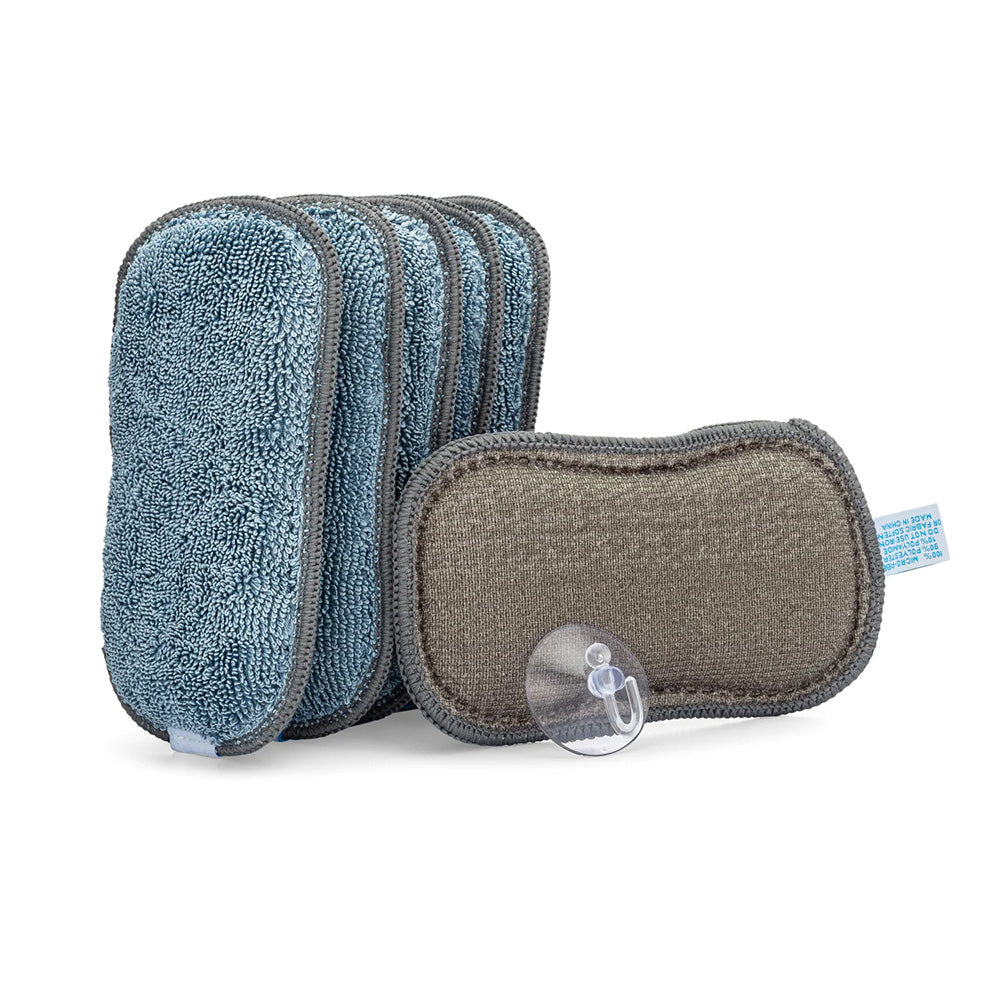
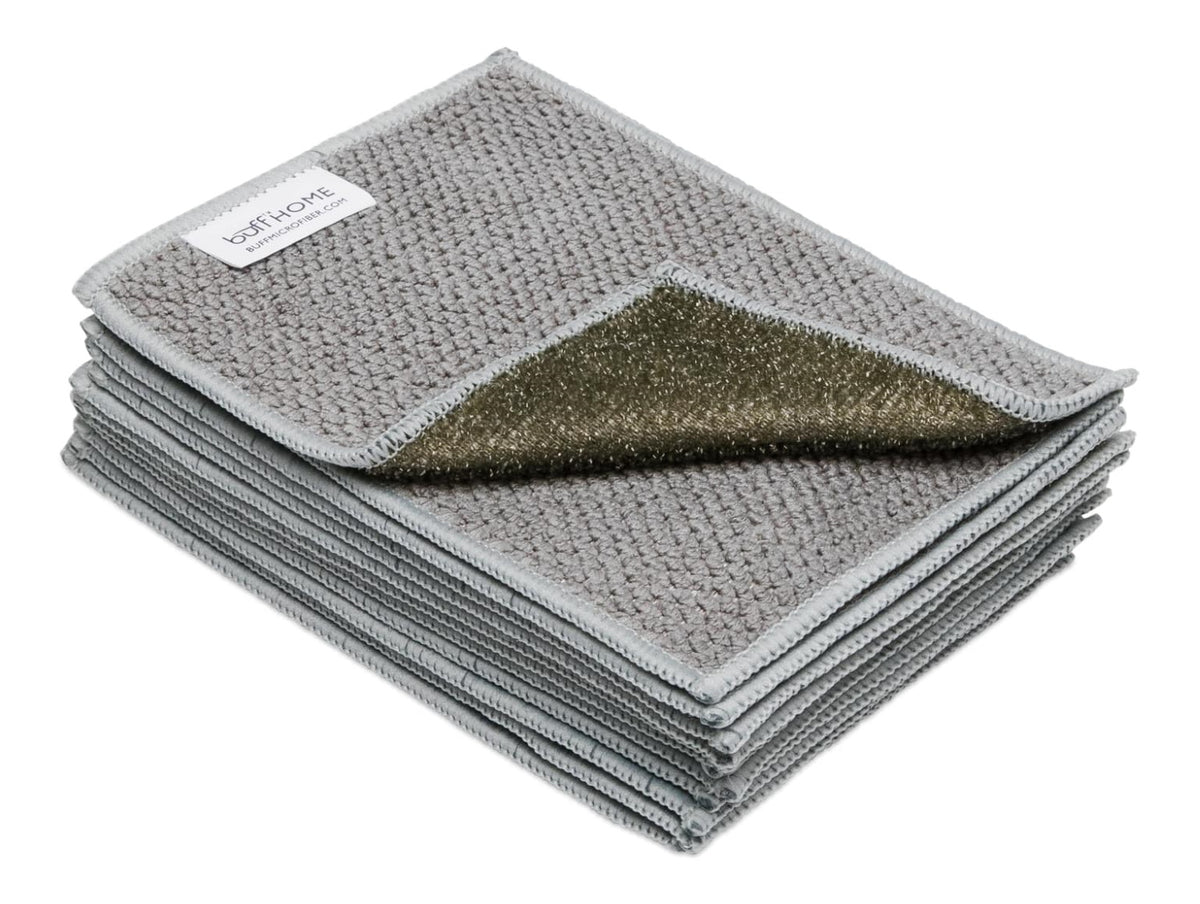
3. Microfiber Scrubber
Surface safety: ⭐⭐⭐⭐½ | Cleaning power: ⭐⭐⭐⭐½
This is one of our favorite middle-ground tools because it solves a common cleaning problem: Regular microfiber isn’t quite getting it, but you really don’t want to reach for an abrasive scrub pad.
A microfiber scrubber gives you more agitation and texture than a standard microfiber towel, making it particularly useful for soap residue, bathroom buildup, kitchen grime, and other stubborn everyday messes. The idea isn’t to eliminate friction. Friction is useful when you’re cleaning.
The goal is to create enough mechanical action to loosen soil without using unnecessary abrasion. Pair a microfiber scrubber with the appropriate cleaning solution and give that cleaner enough time to work, and you can often remove stubborn buildup without the kind of aggressive scrubbing people assume is necessary.
Specialty coatings, extremely delicate finishes, and unusual materials should always be checked first. But for general-purpose cleaning where you need a little extra muscle, microfiber scrubbers hit a very useful sweet spot.
What to Use Instead
For light everyday cleaning, a plain high-quality microfiber cloth may be all the tool you need.
For buildup that a microfiber scrubber can’t quite handle, a non-scratch scrub pad gives you a bit more agitation before you’d need anything abrasive.
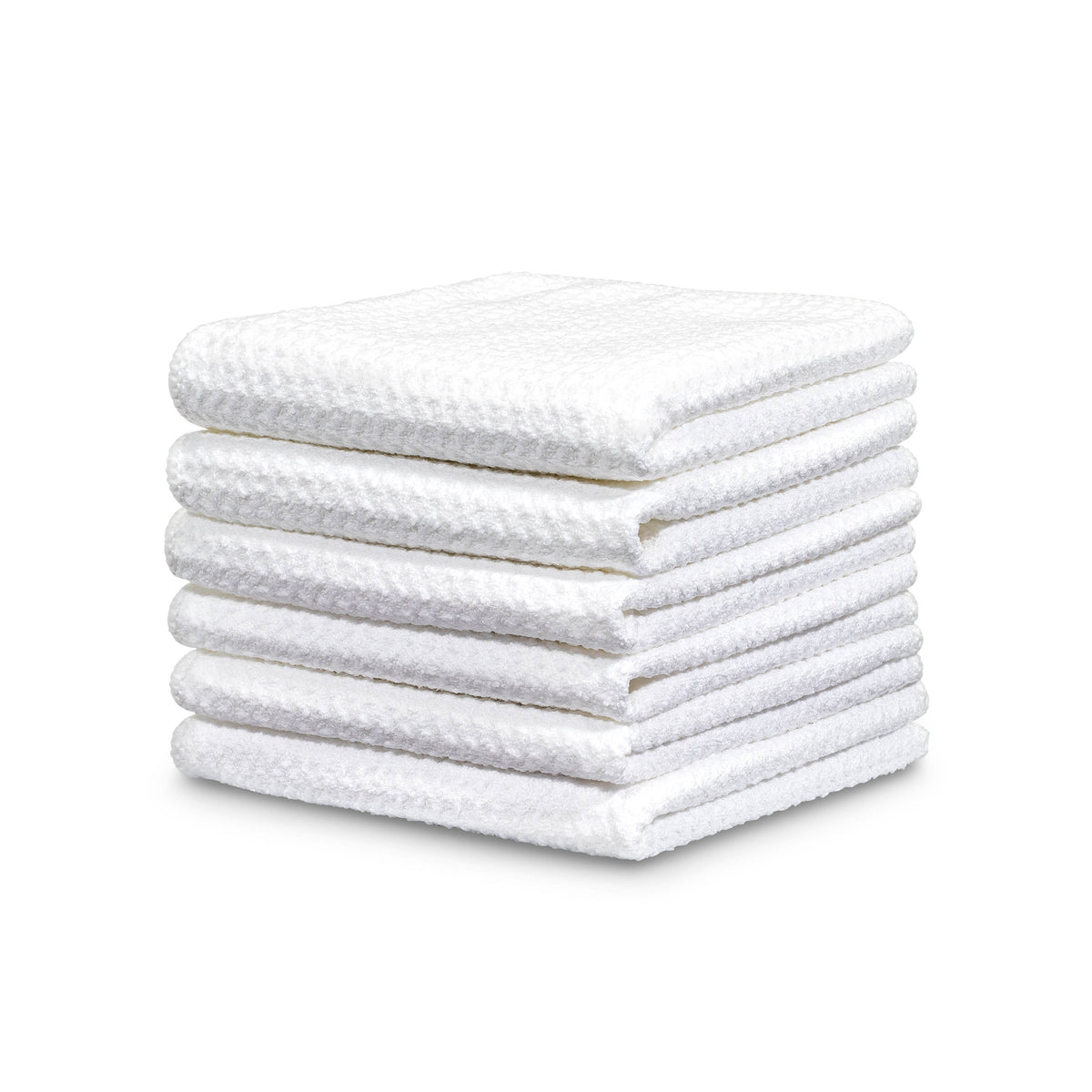
2. High-Quality Microfiber Cleaning Cloth

Surface safety: ⭐⭐⭐⭐⭐ | Cleaning power: ⭐⭐⭐⭐⭐
No surprise here. We sell microfiber for a living, so you’re completely justified in raising an eyebrow when we put it near the top of the list. But there’s a reason professional cleaners rely so heavily on it.
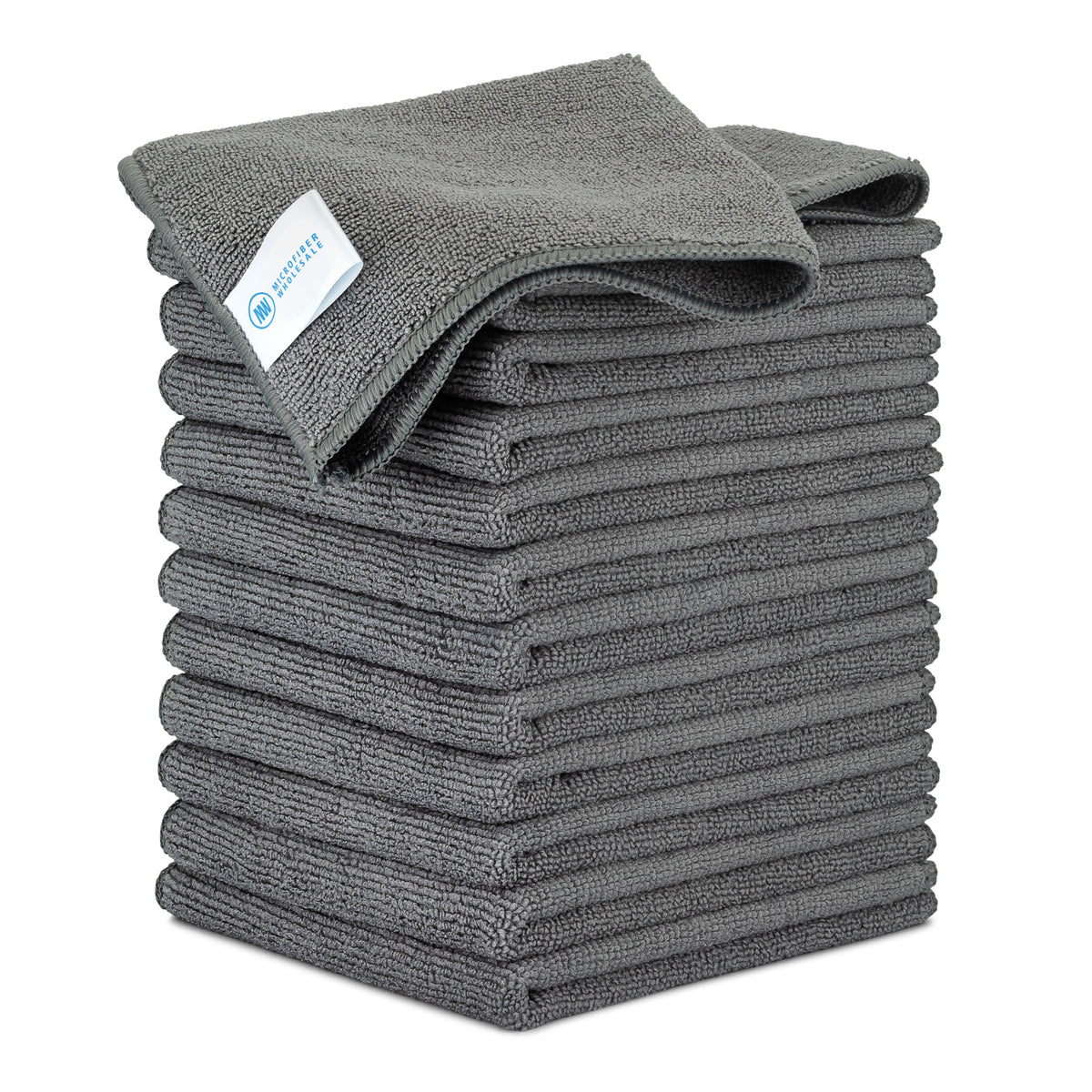
Microfiber gives you mechanical cleaning action without requiring an aggressively abrasive surface. The tiny fibers create enormous surface area and are effective at picking up dust, moisture, oils, and everyday grime instead of simply moving dirty liquid around the surface.
That’s what makes a good microfiber towel such a ridiculously useful cleaning tool for kitchen counters, cabinets, bathroom fixtures, dusting furniture, appliances, and general wiping.
Microfiber’s cleaning performance isn’t just marketing. Laboratory studies have found microfiber cloths effective at removing microorganisms from hard surfaces, including stainless steel, laminate, and ceramic tile. Research has also found that performance varies between different microfiber constructions, which is an important reminder that not every cloth labeled “microfiber” performs exactly the same way.
There’s also a technique advantage people don’t talk about enough. Fold a microfiber towel in half and then in half again. Now you’ve created multiple cleaning sections. Use one section until it becomes soiled, flip to another clean section, and keep rotating.
That keeps you from doing what we see people do all the time: wiping an entire room with one dirty section of a towel and wondering why everything starts streaking.
And remember our warning from the beginning. Microfiber itself can be incredibly gentle, but a towel that’s picked up sand or other abrasive debris can still cause damage. Clean microfiber matters.
What the Research Says About Microfiber
Microfiber’s reputation as an effective cleaning material isn’t based only on how it feels or how much dirt you can see it pick up. Researchers have tested microfiber against conventional cleaning materials under controlled conditions.
In one study, a microfiber mopping system used with detergent removed 95% of microbial contamination from tested floors compared with 68% for a conventional cotton string mop system. Other laboratory research has found microfiber cloths effective at removing microorganisms from stainless steel, laminate, ceramic tile, and other hard surfaces.
There’s an important catch, though: not all microfiber performs identically. Researchers comparing different microfiber cloths have found differences in cleaning performance depending on the cloth construction, condition, and how it is used.
In other words, “microfiber” describes a category of material—not a guarantee that every microfiber towel will perform exactly the same way.
What to Use Instead
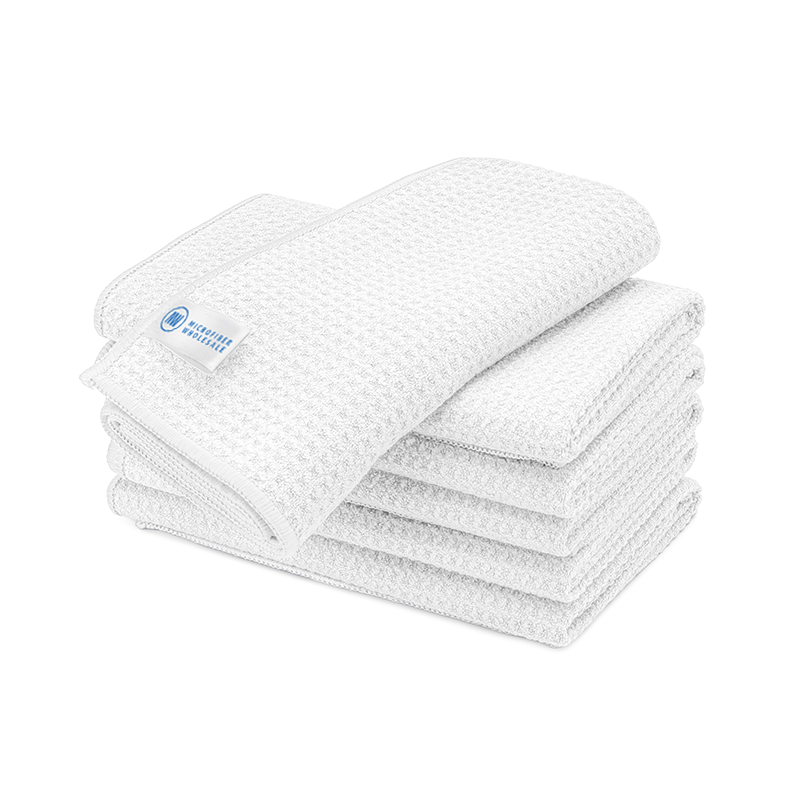
For finishing touches on glass, mirrors, and chrome, switch to glass and polishing microfiber for a streak-free final pass.
If you need more agitation for stubborn residue, a microfiber scrubber is the next step up before reaching for anything abrasive.
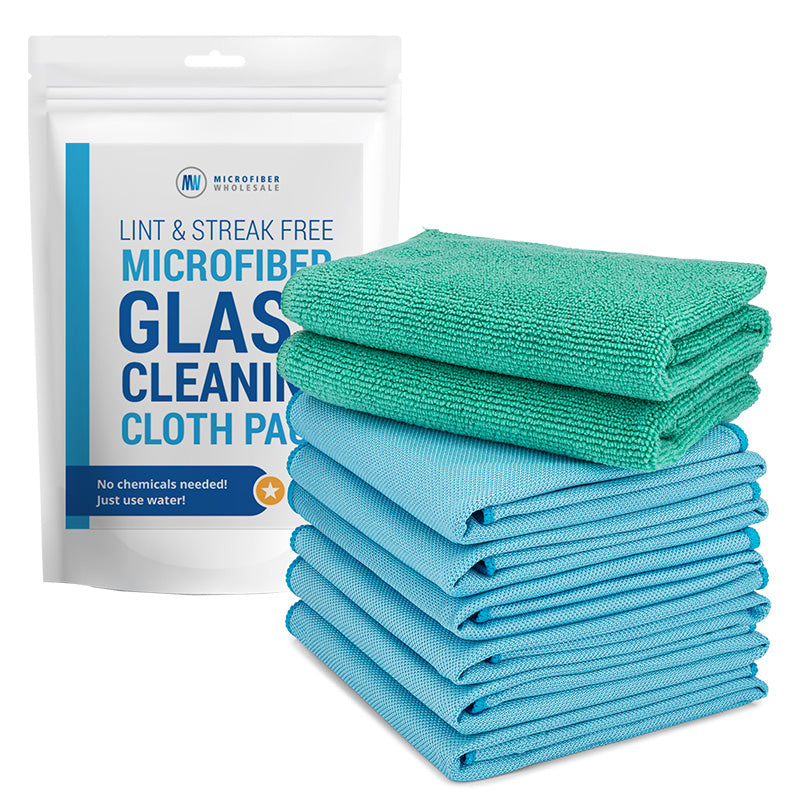
1. Glass & Polishing Microfiber
Surface safety: ⭐⭐⭐⭐⭐ | Cleaning power: ⭐⭐⭐⭐⭐
If regular microfiber is our everyday workhorse, glass and polishing microfiber is the tool we reach for when the finish really matters. You know the surfaces we’re talking about.
Mirrors where one streak somehow becomes the only thing you can see. Stainless steel appliances covered in fingerprints five minutes after you cleaned them. Chrome fixtures. Glass doors. Glossy surfaces. Anywhere lint, streaks, smears, and tiny imperfections immediately stand out.
A quality glass or polishing microfiber is designed with a smoother, finer construction that excels at removing light soil, oils, fingerprints, and moisture while leaving a clean finish behind.
There’s an important distinction here, though. A polishing cloth is a finishing tool, not necessarily the tool we’d choose to attack heavy buildup.
If a glass door is covered in layers of soap scum, for example, don’t expect your polishing cloth to perform miracles. Remove the buildup with the appropriate cleaner and tool first, then bring in your glass microfiber for the final pass. That’s where it shines.
For routine maintenance on scratch-sensitive, highly visible surfaces, it’s tough to beat.
What to Use Instead
For general-purpose cleaning where you don’t need a finishing-quality pass, a high-quality microfiber cleaning cloth is more absorbent and better suited to everyday grime.
If a surface has heavy buildup, remove it with the appropriate cleaner and tool first, then bring in glass microfiber for the final polish.
The Tool Isn’t Always What Scratches the Surface

This deserves its own section because it’s probably the most important point in this entire article. You can buy the softest, gentlest, fanciest cleaning cloth on the planet and still scratch something with it.
Imagine there’s one tiny grain of sand sitting on your countertop. You grab a fresh microfiber towel and start wiping.
The microfiber isn’t scratching your counter. But once the towel picks up that grain of sand and drags it across the surface, you’ve essentially created a tiny piece of sandpaper.
The same thing can happen with mop pads, sponges, scrubbers, and brushes. This isn’t just theoretical. 3M specifically warns with one of its non-scratch products that while the cleaning material itself won’t scratch, particles picked up during cleaning can.
So if you’re serious about preventing scratches, choosing the right cleaning tool is only part of the job.
Remove Loose Dirt First
If you can see crumbs, sand, grit, or other loose debris, don’t immediately start wet wiping.
Vacuum it, sweep it, dust it, or otherwise remove those particles first.
This is especially important on floors, glossy counters, glass, vehicle surfaces, polished materials, and anything else where fine scratches are going to show.
Stop Cleaning With Dirty Tools
This sounds obvious. But we see it all the time.
One towel gets used on the sink, counter, stove, cabinets, table, and half the bathroom before anyone considers replacing it.
When your cloth or pad becomes heavily soiled, swap it out. You’re trying to remove dirt, not take it on a tour of the building.
And there’s research behind that advice. Studies examining microfiber cleaning have found that contaminated cloths can transfer microorganisms onto subsequently cleaned surfaces. In other words, continuing to wipe with a dirty cloth doesn’t just become less effective, it can redistribute some of what you’ve already picked up.
Fold Your Microfiber Towels
Don’t wad your towel into a ball. Fold it.
A simple fold gives you several distinct cleaning surfaces. Once one becomes dirty, flip to the next. You’ll get better cleaning performance, fewer streaks, and much better control over how much soil you’re carrying from one area to another.
Folding also makes it easier to keep track of which part of the towel you’ve already used. That’s important because research has shown that microorganisms picked up by a cleaning cloth can be transferred to surfaces cleaned afterward. Rotating to a genuinely clean section, and replacing the towel once those sections are used, helps limit how much soil you’re carrying from one area to the next.
Don’t Scrub Harder Just Because Something Isn’t Coming Off
More pressure isn’t always more effective. Sometimes you’re using the wrong cleaner. Sometimes the product hasn’t had enough dwell time. Sometimes you’re using the wrong tool entirely.
Before you start putting your body weight into the scrubber, change your approach.
Take Care of Your Cleaning Tools
Cleaning tools need cleaning too. Rinse scrubbers thoroughly. Replace worn or damaged sponges. Launder microfiber correctly and avoid fabric softener, which can interfere with the fibers’ performance. Keep cleaning towels separate from lint-heavy laundry whenever possible.
Microfiber is designed to be reusable, but how it’s laundered matters. Research examining reprocessed microfiber has found that properly laundered microfiber can retain effective cleaning performance through repeated use, although results vary depending on the cloth and laundering conditions.
A clean tool performs better, and there’s less chance you’re dragging yesterday’s dirt across today’s surface.
The Better Rule: Start Gentle and Work Your Way Up

Instead of asking, “What’s the strongest thing I can use to get this off?” try asking: “What’s the gentlest thing that will get this off?” That’s a much better way to approach cleaning.
Start with your least aggressive option. Give your cleaning product enough dwell time to loosen the soil. Add agitation if you need it. Move up to a more aggressive tool only when the gentler option isn’t doing the job.
It’s tempting to think professional cleaning is all about stronger chemicals and tougher scrubbers. A lot of the time, it’s the opposite.
Experienced cleaners know when not to scrub. They’re thinking about the type of soil they’re removing, the surface underneath it, the cleaning chemistry they’re using, dwell time, temperature, agitation, and what could potentially go wrong.
Getting something clean is only half the job. Getting it clean without damaging it is the other half.
Don’t Use More Scrubbing Power Than You Need
The best cleaning tool isn’t necessarily the one that removes a mess the fastest. It’s the one that gets the surface clean without leaving damage behind.
That’s why we’d rather have a cleaning kit with different levels of agitation than one supposedly “powerful” scrubber that gets used on everything.
For everyday cleaning, start with quality microfiber. When you need extra agitation, move up to a microfiber scrubber or an appropriate non-scratch option. Save the more abrasive tools for the situations where they’re actually necessary.
And no matter which tool you’re using, keep it clean. Because sometimes it’s not the sponge, pad, mop, or microfiber towel that causes the scratch. It’s the tiny piece of grit stuck to it.
When in doubt, start gentle. You can always add more cleaning power. You can’t unscrub a surface.
Preguntas frecuentes
What is the safest cleaning tool for most surfaces?
A high-quality microfiber cloth is one of the best starting points for general cleaning because it combines effective soil removal with relatively gentle mechanical action.
That doesn’t mean microfiber is automatically appropriate for every surface or situation. Always follow the care instructions for specialty materials and finishes.
And before wiping any scratch-sensitive surface, remove loose grit first. A clean microfiber towel is gentle. A microfiber towel with a piece of sand trapped in it is a different story.
Can microfiber cloths scratch surfaces?
The microfiber itself is generally very gentle, but anything trapped in the cloth can potentially scratch.
That’s why we recommend using clean towels, rotating to fresh sections frequently, and removing loose debris before you start wiping.
It’s also one reason you don’t want to use the same microfiber towel indefinitely. Once it’s loaded with dirt, swap it for a clean one.
Are Magic Erasers safe on all surfaces?
No.
Melamine foam works as a mild abrasive, which is part of what makes it so effective at removing stubborn marks. That same action makes it unsuitable for some polished, painted, coated, or delicate surfaces.
If you’re unsure, check the surface manufacturer’s cleaning recommendations and test in an inconspicuous area first.
Are non-scratch scrubbers really non-scratch?
A quality non-scratch scrubber is designed to be gentler than a traditional abrasive scouring pad, but “non-scratch” shouldn’t be interpreted as “impossible to cause damage under any circumstances.”
Surface compatibility still matters. So does contamination.
Even a non-scratch tool can pick up hard particles during cleaning and drag them across a surface. Some manufacturers explicitly warn about this possibility.
What’s better for cleaning: a sponge or microfiber cloth?
It depends on the job, but for general-purpose wiping and cleaning, we’d usually choose microfiber.
A sponge is great when you need absorbency, lots of water, or a tool for washing. Microfiber is particularly useful when you want to pick up and hold soil, oils, dust, and moisture while leaving less behind.
There’s no reason you can’t keep both in your cleaning kit. They solve different problems.
What should I use when microfiber isn’t strong enough?
Don’t immediately jump to the most abrasive scrubber you own.
First, look at your cleaning solution. Is it appropriate for the soil you’re trying to remove? Have you given it enough dwell time?
If the answer to both is yes, move up gradually. A microfiber scrubber or non-scratch scrub pad may give you the extra agitation you need without going straight to an aggressive abrasive.
How can I clean without scratching stainless steel?
Start by checking the manufacturer’s care instructions, especially if the stainless has a specialty finish or coating.
Remove loose debris before wiping and use a clean, soft cloth appropriate for the surface. When the steel has a visible grain, cleaning with the grain is generally preferable to aggressively scrubbing across it.
And don’t assume that a product labeled “non-scratch” belongs on every stainless steel appliance. Some non-scratch scrubber manufacturers specifically exclude stainless steel appliances from their recommended uses.
What cleaning tools should professional cleaners keep on hand?
Rather than relying on one do-everything tool, a good cleaning kit should give you levels of agitation.
That might include general-purpose microfiber towels for everyday cleaning, glass microfiber for polishing, microfiber scrubbers or non-scratch pads for more stubborn soil, brushes for detail work, and specialty tools for the occasional job that genuinely needs more aggression.
The key is having options so you’re not forced to use an overly aggressive tool simply because it’s the only thing available.
The products the pros won’t clean without
Our best sellers aren’t best sellers by accident. These are the microfiber towels, mops, and dusters that professional cleaning crews order again and again — the same products that cleaners at some of the largest cleaning companies in the country depend on every single shift.
When your reputation rides on every surface you touch, you don’t gamble on your tools. These are the ones that have earned their spot — wash after wash, job after job.


